
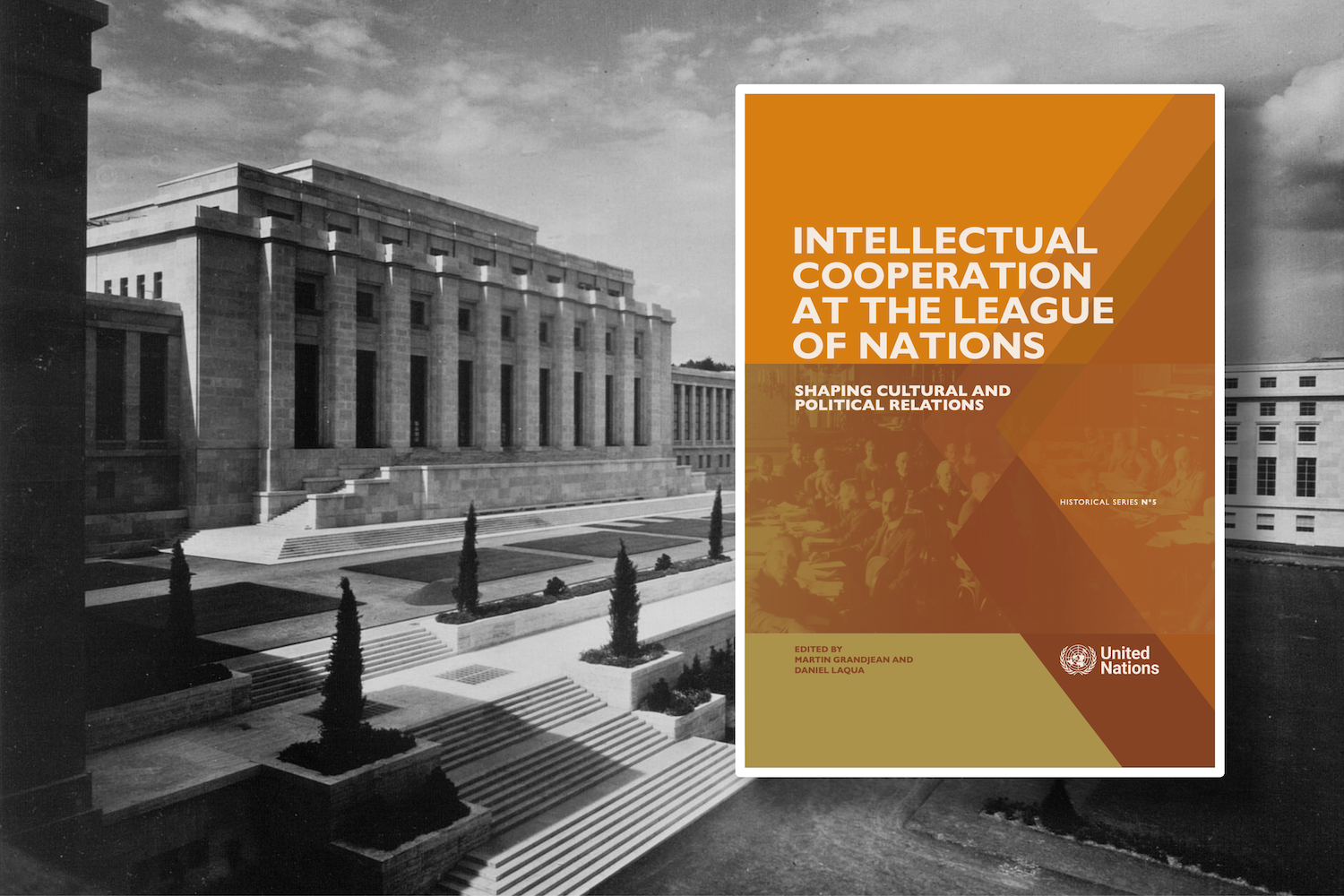
New book released!
I am very pleased to announce the publication of a book that I had the privilege of editing with Daniel Laqua on the history of intellectual cooperation at the League of Nations, published in the United Nations Historical Series.
CITATION
Grandjean Martin and Laqua Daniel, eds. Intellectual Cooperation at the League of Nations: Shaping Cultural and Political Relations. UN Historical Series. Geneva: United Nations, 2025, 233 pages. ISBN: 9789211072808 DOI: 10.18356/9789211072808
The book is available online
Read online |
Download PDF |
Print version |
| Read online | Download PDF | |
| Provided by the UN-iLibrary website | Provided by the UN Digital Library |
Ordering the print version will soon be available through the UN Publications website |
Presentation
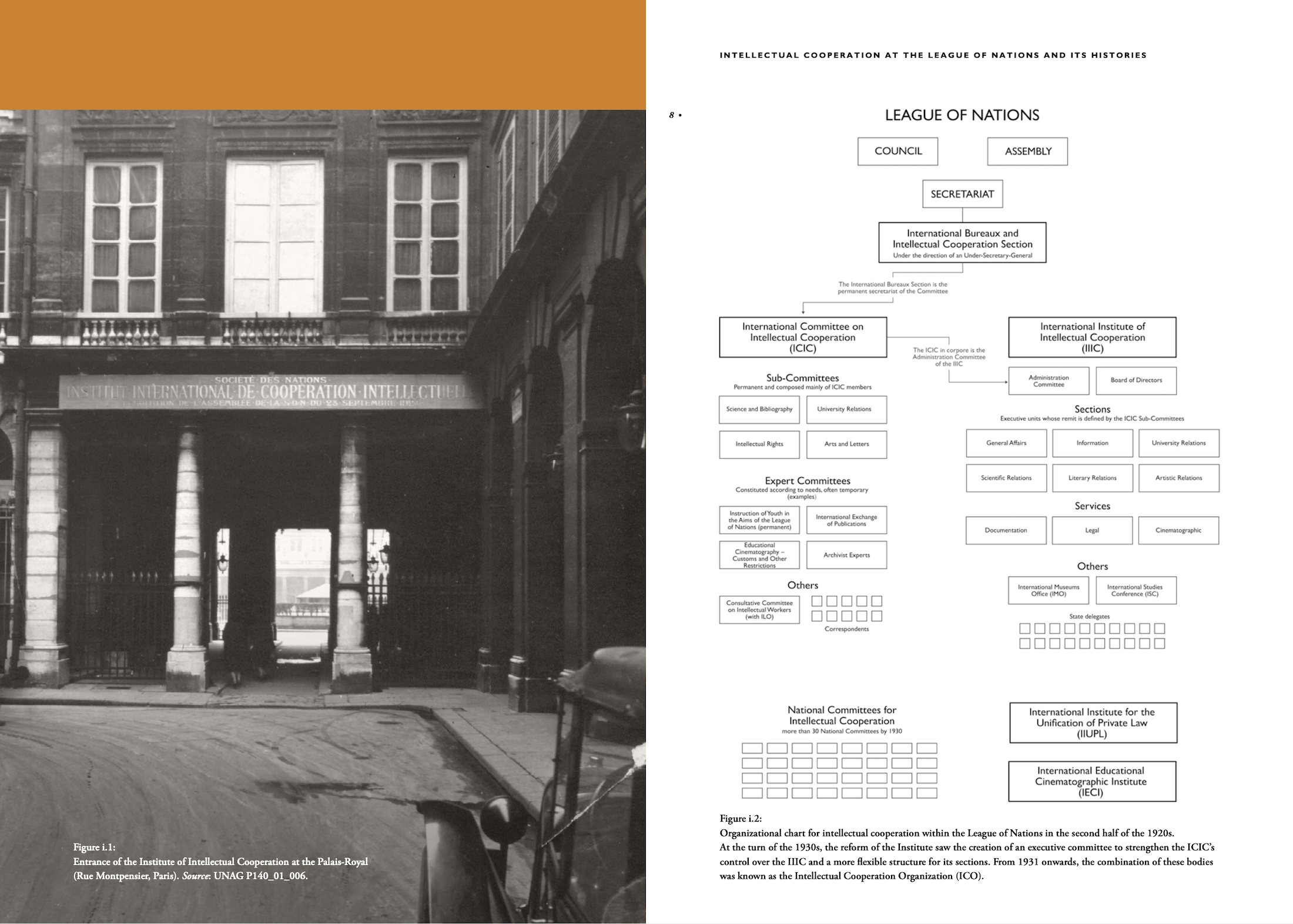
The construction of a new global order after the First World War required not only political and economic efforts, but also the coordination of scientific and cultural relations on an international scale. To this end, the League of Nations launched a range of initiatives, including the creation of its International Committee on Intellectual Cooperation (1922), the foundation of the Paris-based International Institute of Intellectual Cooperation (1925–26) as well as the formation of various auxiliary bodies. These ventures aimed to develop a collaborative dynamic around issues as diverse as scientific cooperation, educational means for peace as well as artistic and literary relations. Attracting some of the era’s most eminent intellectuals, these initiatives did not lead to the creation of a “League of Minds”, as some of the architects of the League of Nations had so eagerly hoped. However, as this volume demonstrates, these efforts did play a key role in the development of cultural diplomacy and in the evolution of transnational fields of action during the interwar period. Moreover, the history of transnational intellectual cooperation in this period illuminates wider issues surrounding international relations and the development of international organizations.
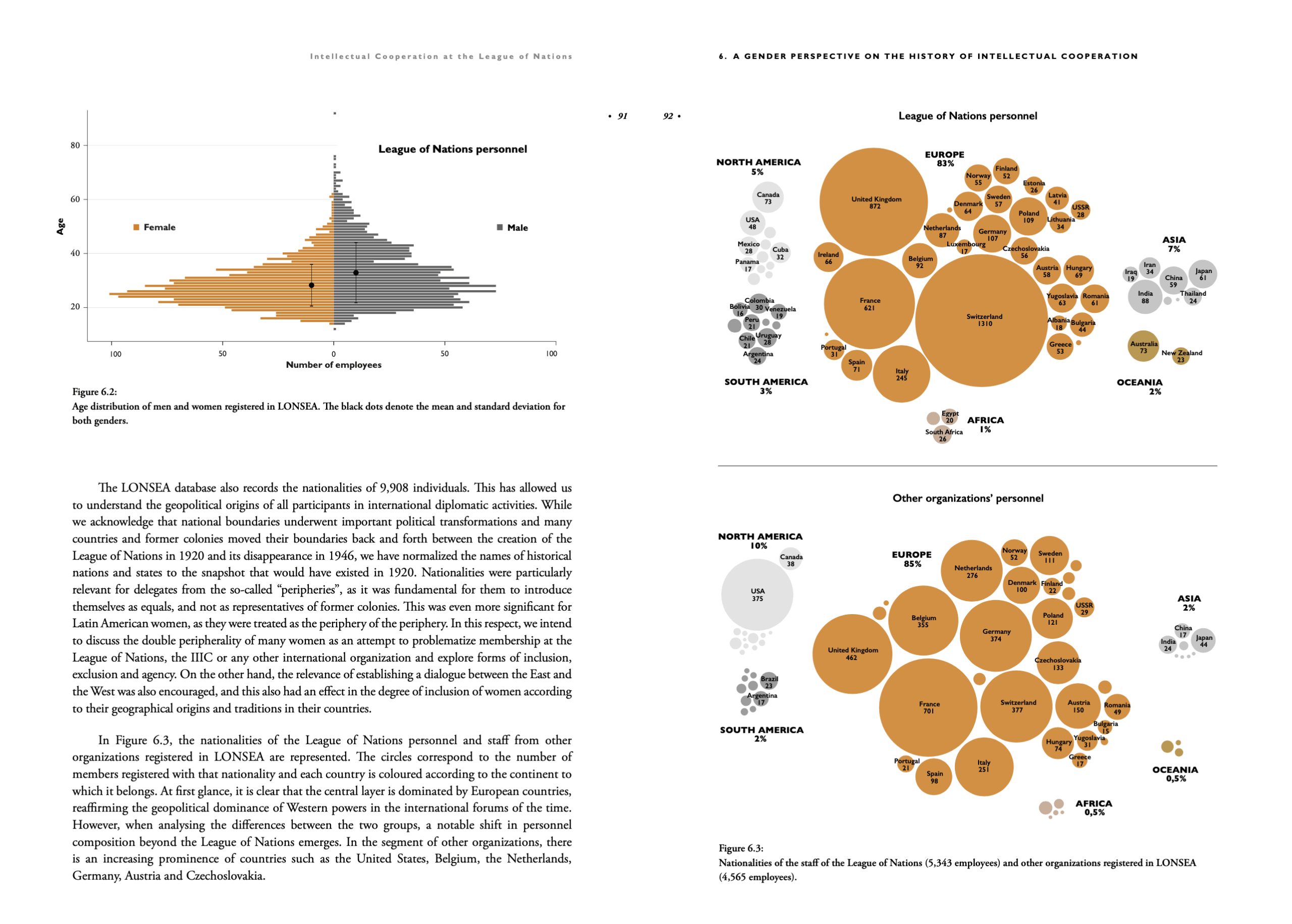
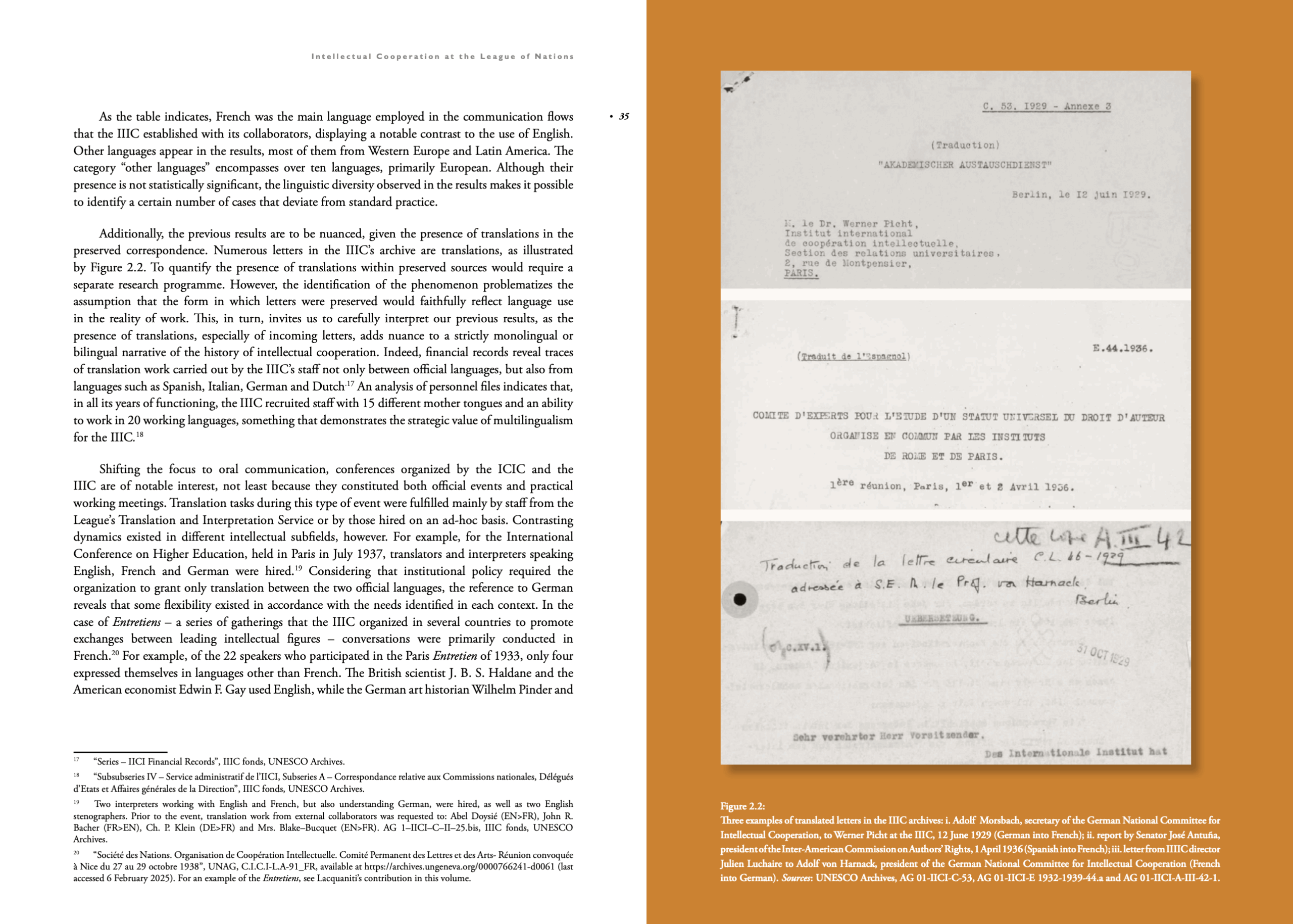
Edited by Martin Grandjean and Daniel Laqua, this book brings together the research of 17 scholars, highlighting the breadth of the League’s work in the field of intellectual cooperation and detailing a range of transnational connections across a variety of cultural fields.
Chapters
Learn more
I recommend the website intellectualcooperation.org, which was created for the international conference celebrating the centenary of the International Committee on Intellectual Cooperation at the United Nations in Geneva in 2022. It contains the conference Book of Abstracts, which complements this book well in showing the diversity of approaches and the renewal of research on intellectual cooperation, as well as a bibliography of over 400 titles on the subject!
Picture: “Palais des Nations: Assembly Hall and Court of Honor” (Charles-Edouard Boesch), UN Archives P119_01_038, view online.